// building sound worlds, capturing sonic textures //
sound & visual artist | musician | recordist | composer
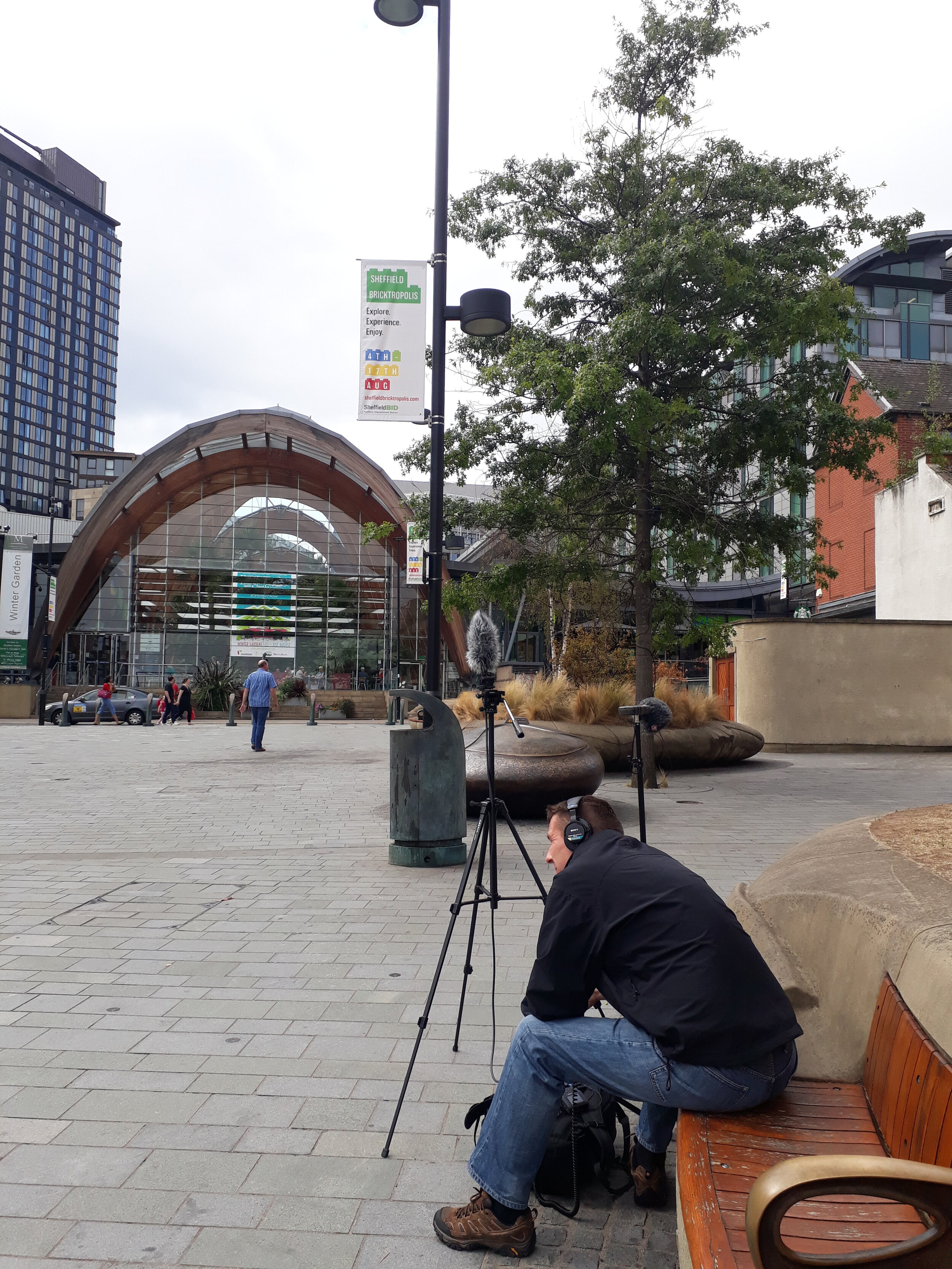
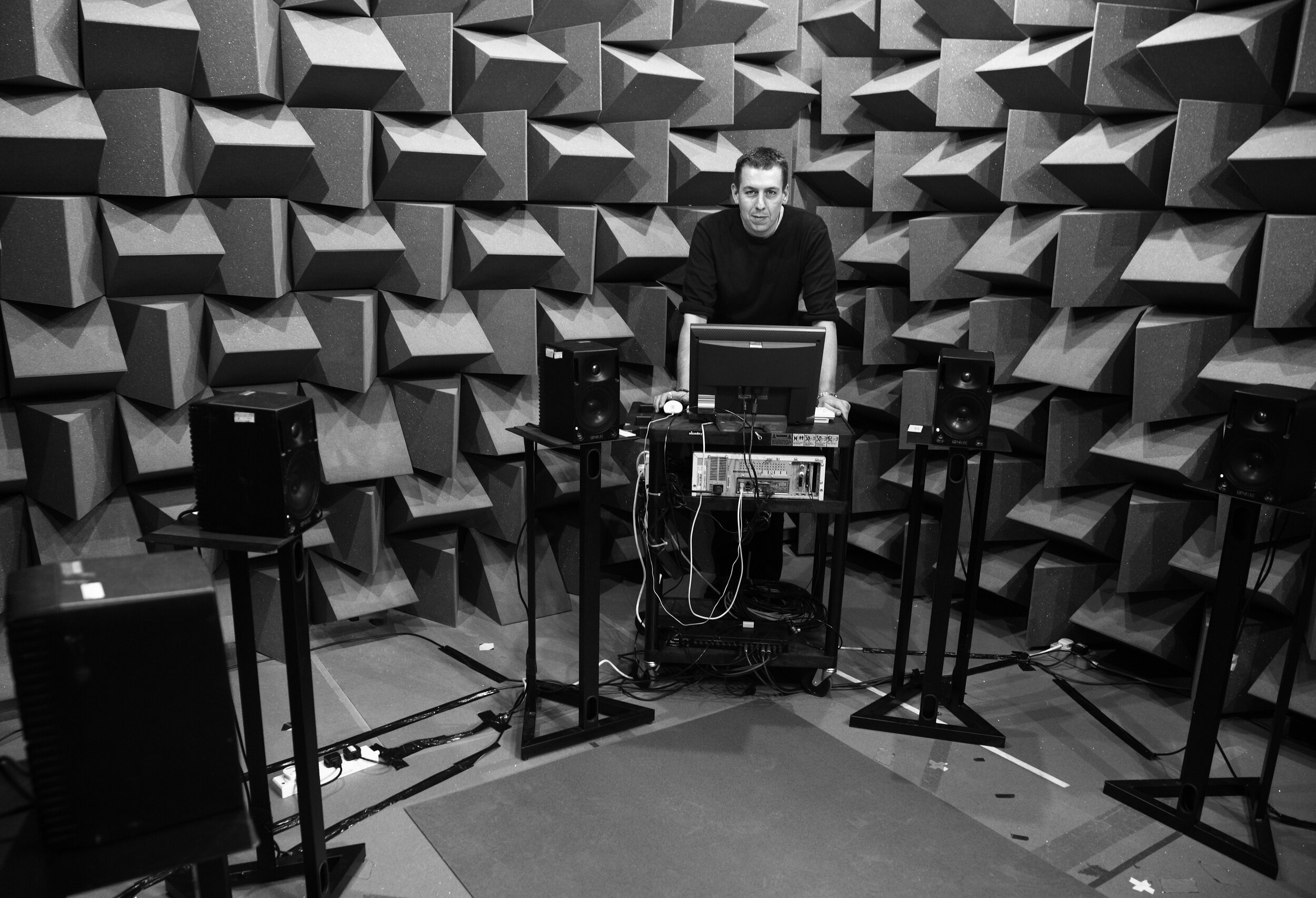
Neil Spencer Bruce is a sound artist, designer, recordist, guitarist and composer whose range of innovative works extends from solo albums, films, computer games, apps, sound installations and soundscape simulators. He specialises in creating immersive sound-worlds, drawing from environmental sound and field recording practices, creating sonic content for film, television, games, apps, audio brands, installations, VR, AR and public spaces. He lectures at several UK universities and runs The Sound Consultancy.
With a background in field recording, electronic music and audio production, Neil's creative and research practice involves using sounds, field recording, sampling, soundwalking and composition to examine and reconsider the psychological impact of soundscape on wellbeing and understand the emotional impacts of sounds.
He has performed as a guitarist both solo and with various musicians all around the world and has worked in the studio with iconic artists such as Al Green, Barbara Cooke, Jimmy Page and Robert Plant. With over 40 million streams, Neil also releases music and sound art under the name Light B4 Sound.
He hosts the Creativity Kickstarter podcast and associated creativity workshops, is the author of '100 Creative Strategies to kickstart your creativity' and is an award-winning filmmaker.
He holds a PhD in Soundscapes from the University of Salford.
// examples //
“Neil is a superlative sound creator – from subtle effects to fully integrated soundscape scores that linger.”
// Jonathan Stewart – Director, DeFusion Films
“A talented soundtrack composer who understands and has great passion for the requirements of the film medium.”
// Caroline Boyd - Head of Marketing and Communications, Together Trust
“I hope you get the chance to work with Neil, because he’s nothing short of fantastic!”
// Tony Gibbs — The Freelancer’s Coach
“Neil designed the sound and music for Mole Miner for Android. Working a loose brief he delivered on-time with great results. Highly recommended.”
// Kenton Price - CEO, Little Fluffy Toys
“His work is characterised by enthusiasm, energy, creative judgment, and thorough technical knowledge. This is a mixture of talent, which I have rarely found.”
// Dr Wilfred Darlington - Senior Lecturer, University of Salford
“Neil has great skills and an incredible working knowledge of sound and moving image technologies. His creative interests and gifts are many and a strength in his professional performance.”
//Professor Paul Heywood - University of Salford
Composition
Sound Design
Film
IMDB Page // Neil Spencer Bruce IMDB
New Album December 2021
// Blog //
Thematically, I have written a few posts recently about how I feel that we have sleepwalked into a digital panopticon of our own making…(yes, obviously a slight change from the sound and music posts I typically do). However, I believe there is a connection between both areas, and it is always something which is on my mind, and well…this is my blog after all. I feel that we seem to have entered a period in which we now live inside a fragile digital archive, where everything that matters to us, from our work, our money, our identities, our memories, our art and even a journal of our performative emotions…only exists as digital data…. data represented by binary 1s and 0s or ephemeral electrical pulses, without even a sense of place. No actually physical location but scattered across servers and data centres we neither see nor control.
It has been a while since I have released a substantive project for one reason or another, but in 2026 I like to think that I am back. I guess there is a familiar narrative in contemporary music and art, that of the return, the reinvention, the or the rebrand (yuk!). But Driftworlds doesn’t quite fit that path for me, this is not simply a new beginning but I feel it is a reawakening of my artistic being after some time in the darkness. It is a realignment of what my creative existence actually is, a discovery of my voice and what it is that I am actually trying to say with my art.
We seemingly will happily describe a view, a meal, or a holiday in great detail, but without any reference to sound, to think of it, how many activities in life do we talk about focusing on the sound? And yet, if we look carefully, there is a substantial body of material where people do talk about sound, usually in the form of ‘noise’. You’ll find it on the endless scroll of social media.
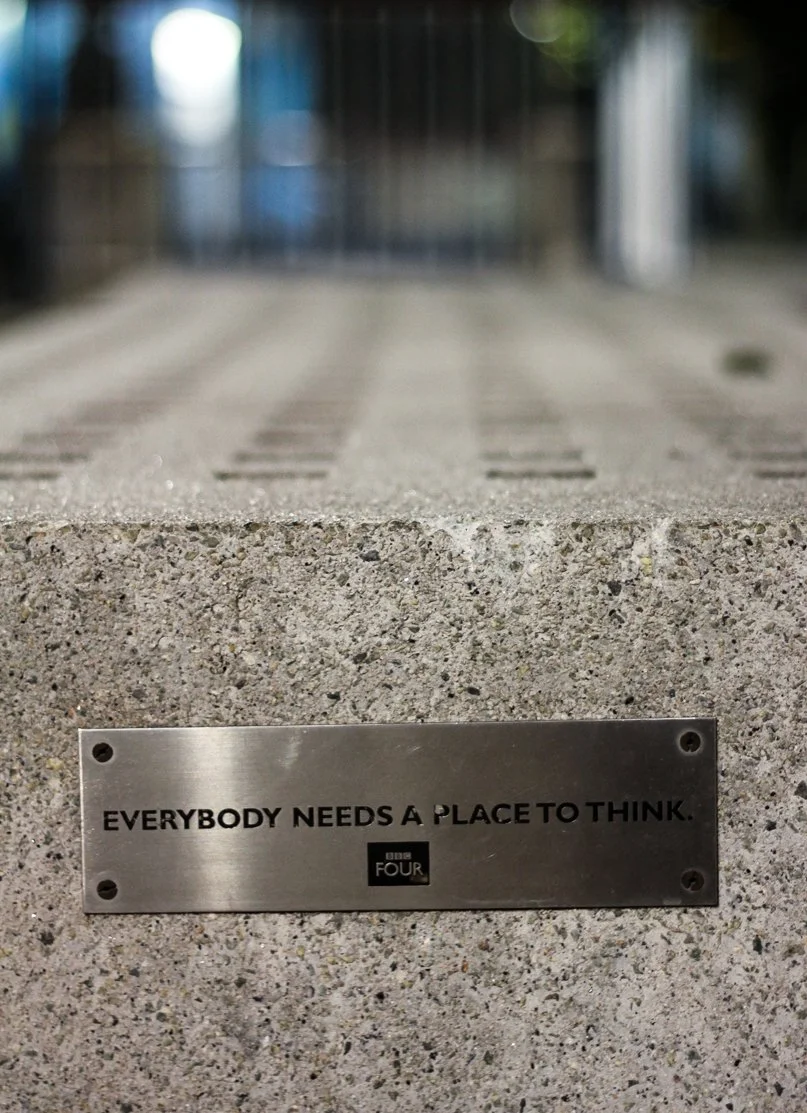
here is a couple of benches I always return to, both of them small and otherwise unremarkable pieces of urban street furniture, one overlooking a strip of grass and an indifferent sky and the other at the intersection of brutalist concrete design and an ancient waterway, both in a city, a city that no matter what (even the fact I no longer live there) always is my spirtual home and birth place(London). For most of my formative years, right up until my 4th decade, these benches were my anchor, places to stop, think and be inspired, a hopes and dreams launchpad if you will.
Feeding the Algorithm is an ongoing series of experimental sound and video works made in partial refusal, partial complicity (oh the hypocrisy.) It emerges from a moment in which creativity is no longer judged by intensity, risk, or attention, but by frequency. To exist online is to remain active and to remain active is to produce/consume. Silence is treated not as creative time, flow or art but as failure.
am always teaching that sound is immediate, it enters our being before we can prepare, before thought can form a perceptual shield against it. From the time we are in the womb, before ‘King Sight’ (Walter Murch in Chion’s Audio Vision) has taken over we are learning and understanding about the our world through it, and then when we born, our existence in the world is to be immersed in it, pulled into relations that we do not choose but cannot escape. Unlike sight, a sense which allows for distance and framing, sound insists on intimacy, it places us inside the world and ourselves. Ever since, just over 50 years ago, R. Murray Schafer tried to “tune the world” and formalised the notion of ‘soundscape’ and thus soundscape studies which has lead increasing formalisation within the frameworks of academia and now government legislation (for example in the Noise and Soundscape Plan for Wales 2023-2028).
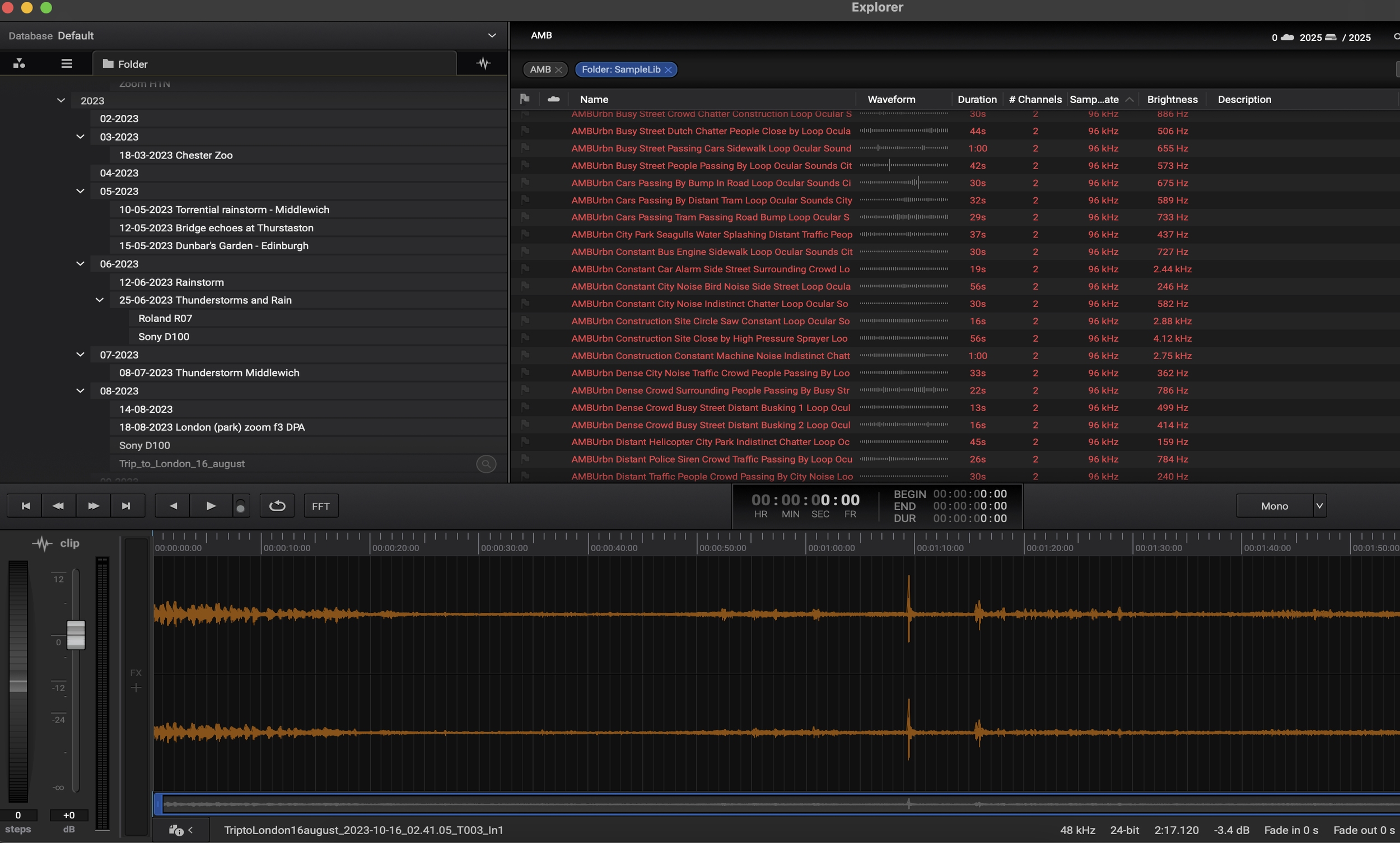
For those of us who are sound designers or field recordists, we all have tons of recordings which may or may not be well labelled or traceable once they get copied on to a hard drive. Being able to search, find and understand what a recording contains is a major requirement when working professionally, as a badly organised or unlabelled library becomes a veritable haystack from which you are trying to extract a needle! UCS offers a method which means you can easily work through your own and other professional sound libaries. Here is a practical introduction and how-to guide on what it is and how you can use it.
A sound diary or journal is both mindfulness and archive, practice and creation. By noting the sounds of daily life, we bring hidden elements of our lives, memories and soundscapes into focus. This practice grounds us in the present while also tracing personal, social, and cultural histories. Over time, the diary becomes a sonic map: a record of how places, and we ourselves, sound.
This study explores the practice of "soundtalking," a novel method of participant-led sound practice, within the environment and soundscape of the Dee Estuary in the UK. Over the course of twelve months, the Our Dee Estuary Project facilitated monthly meetings where participants engaged in in-depth discussions and sound-making activities, fostering a deeper connection with both their local and auditory environments.
In the age of hypermodernity, the very fabric of our daily existence is woven tightly by systems supposedly designed to eliminate uncertainty, variability and angst, whilst giving us a market of free choice (all through the lens of extracting as much money from us as possible).
I am thrilled to announce that I will be performing at the Chorlton Arts Festival next Saturday, May 18th. This festival is a vibrant celebration of arts and culture in the heart of Chorlton, and I am honoured to contribute to its diverse program with a set of solo ambient cinematic soundscapes.
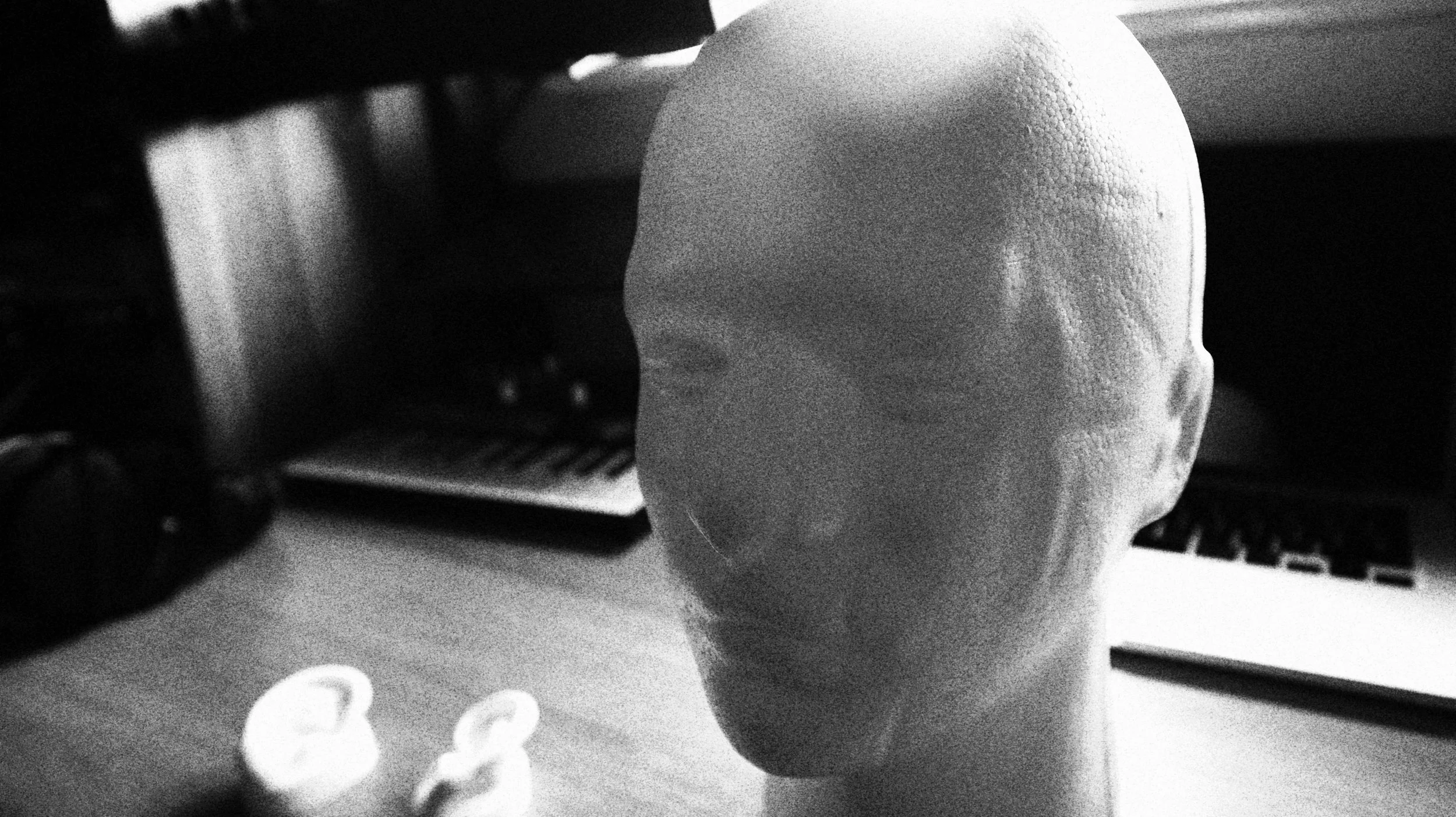
Building a dummy head will allow you to explore the immersive world of binaural recording without breaking the bank, creating your own tool which (mostly) mimics human hearing to create a 3-D auditory experience.
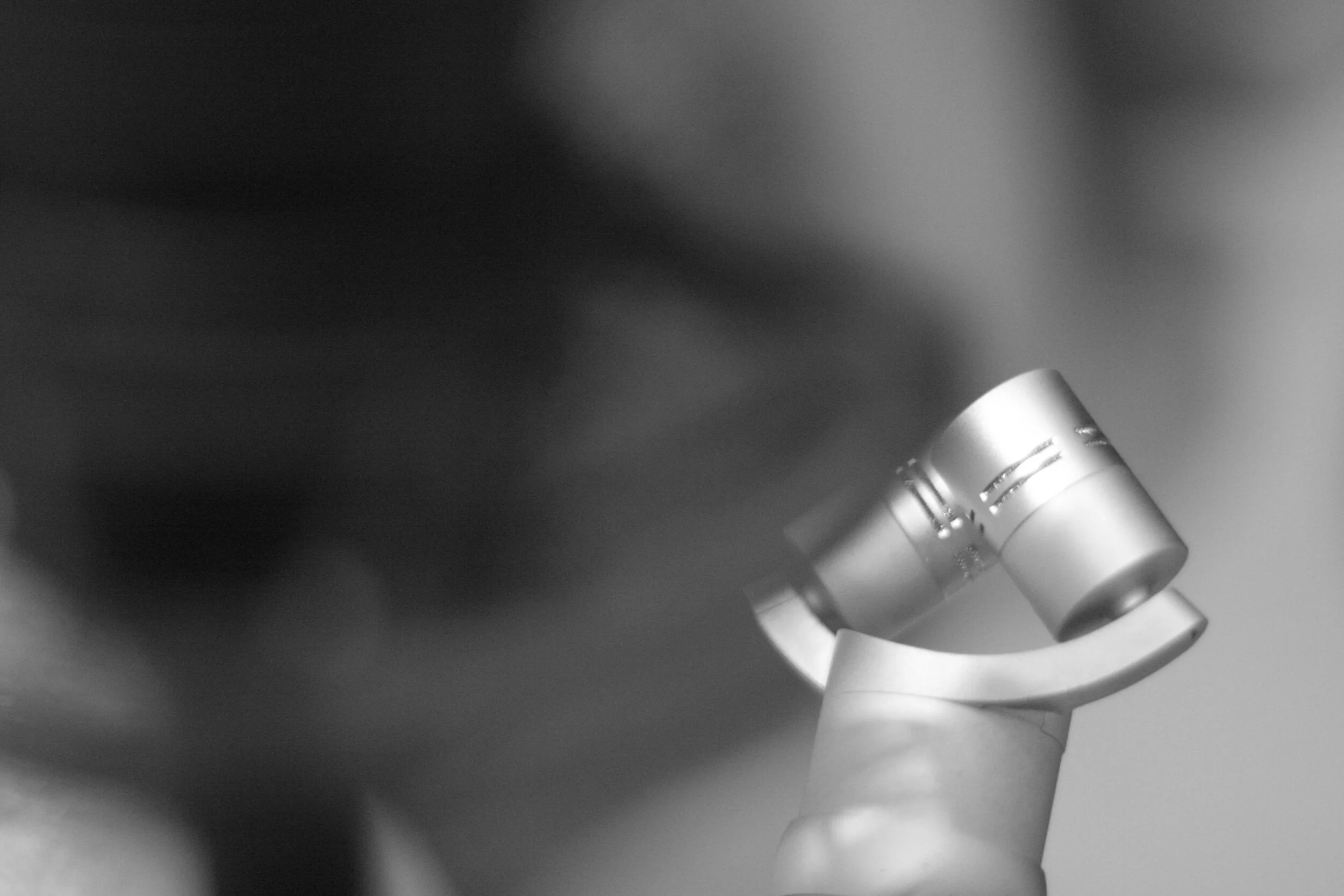
Throughout my recording and soundscape career, I've explored various (if not all!) recording methods to capture the sound worlds which surround us. However, binaural recording has always held a special place in my heart, since I read about it being used as a recording technique in Sound On Sound sometime in the mid-1990s about Tchad Blake .
In 2023, I set myself another creative challenge for the year, this was the fifth time I have worked on either a daily or weekly yearly challenge. For 2023, I choose a weekly creation task for a number of reasons. Primarily, like all of these challenges, it is to keep working, focusing and creating new material. I also used this project as an opportunity. to develop skills and understanding of how I could push technology, in particular digital workstations (both video and audio ) and capture devices (camera and recording devices).